HRCSA – Material Specification

Posted on

Is what you are buying authentic HRCSA or a knockoff product?

It happens for us to hear market claims that “A certain product of this same type is being produced in ______ or ______ country.” Nor is it unusual to hear claims that “Our coating product performs equal to or better then HRCSA.” When asked to prove it, these claims always seem to vanish as quickly as they came.

How do you know if what you are getting is conformant to the generic HRCSA specification?

Clear up the Confusion

HRCSA’s 30 year history of field proven notable performance achievements comes from a coating system whose genuine HRCSA (High Ratio Co-Polymerized Calcium Sulfonate).

HRCSA Self Priming Topcoat– High Ratio Co-Polymerized Calcium Sulfonate HRCSA (Minimum 9.5% active sulfonate, must maintain a 9-11 to 1 ± 2% ratio Total Base Number to Active Sulfonate i.e. total base number of 85 to 104 to 9.5% Active Sulfonate as determined by Titration Testing

HRCSA Penetrant (Sealer) – High Ratio Co-Polymerized Calcium Sulfonate HRCSA (Minimum 15% active sulfonate, must maintain a 9-11 to 1 ± 2% ratio Total Base Number to Active Sulfonate ie. total base number of 135 to 165 to 15% Active Sulfonate as determined by Titration Testing

The following 3 downloads provide you with all that you need to test that you are getting what you asked for – and nothing less.

Your Bill of Rights

  • You have the right to receive the field tested, authentic version of the product you were sold.
  • You have the right to ask to work with unsealed containers.
  • You have a right to ask for photos of batch numbers of the HRCSA materials received and used on your corrosion mitigation job.
  • You have a right to ask your licensed manufacturer for certificates of authenticity to confirm that the sealed containers you received conform to the materials specified in your bid documents.

How to Get a 5 Year Joint Corrosion Warranty from your Contractor.

Fill in the following form and an online webinar with your nearest HRCSA licensee will be arranged. (Please allow 2-3 business days.)

[contact-field required="1" type="name" label="Name"/] [contact-field required="1" type="email" label="Email"/] [contact-field required="1" type="telephone" label="Phone"/] [contact-field label="Date" required="1" type="date"/] [contact-field label="Time" required="1" options="Morning,Afternoon" type="radio"/] [contact-field label="Notes" type="textarea"/]

HRCSA Coating Life Expectancy

Posted on

Coating life expectancy.

Japanese and American lab tests predict that the HRCSA coating system (250 microns recoat) will last 40+ years in the field.

Field erosion tests measured losses at a rate of 25 microns every 5,6 years.

Unfortunately, none of these performance predictions mean anything if the structure they are being applied to is being torn apart by structure critical corrosion.

Primary Reasons For Collapses.

Bent plates, loss of fasteners, loss of section, weakened girders, Ongoing section loss due to corrosion can negatively impact load ratings over time.

Corrosion frozen moving parts induce great stress to the superstructure and may induce microcracking, bending and misalignment of critical components.

Corrosion within the strands can affect structural integrity and load carrying capabilities. [PS: HRCSA offers OUTSTANDING wire rope coating solutions! Enquire below.]

Leaking expansion joints affect piers, bearings, bends, superstructure and substructure elements.

“Threats to Coating Service life.”

Damage / Abrasion / Impact / undercutting

Ph environment, de-icing salts, atmospheric pollution.

Preservation’s primary objective is to extend the service life and utility of existing assets.

  • Cost effective and easily deployed with least amount of delay to the users.
  • HRCSA is 30 year field proven to help solve the specific corrosion issues identified above.

Ask Your Supplier:

  • Does the coating system you propose solve the potential or actual structure critical corrosion problems that are present on my asset?
  • Does the proposed coating system demonstrate the proven ability to chemically stop crevice corrosion, pack rust, free corrosion frozen bearings, on structures with complex geometries and inaccessible areas to stop section loss and compromises to structural integrity?
  • How does your proposed coating systems’ chemistry deal with crevice corrosion, pack rust, corrosion frozen bearings, and complex geometries?
  • What testing, field experience, and case histories can you provide to confirm your system’s demonstrated ability to mitigate the above-mentioned corrosion issues?
  • How is your system cost effective and rapidly deployed to minimize user delays?
  • Do you have peer reviewed publications to back your claims?
  • What type of performance warranty has your solution offering been tied to and can you provide a written example?

Do you have a project in mind? Schedule a meeting.

[contact-field required="1" type="name" label="Name"/] [contact-field required="1" type="email" label="Email"/] [contact-field required="1" type="telephone" label="Phone"/] [contact-field label="Date" required="1" type="date"/] [contact-field label="Time" required="1" options="Morning,Afternoon" type="radio"/] [contact-field label="Notes" type="textarea"/]

HRCSA: Material Management

Posted on

Material Management made easy with HRCSA.

The HRCSA corrosion mitigation system is user friendly, surface tolerant, worker safety and environmentally friendly.

User-friendly: Single component, single coat (slow cure) materials ensures a fully wetted substrate which, when applied to a properly prepared substrate, is field proven to:

  • Chemically stop corrosion inside connections
  • Provide lubricity inside bearings, pins, moving parts
  • Elastomeric (moves and stretches at connections – without microcracking).
  • Low surface energy: Will not cause overcoated substrate coatings to lift.
  • Fully wets voids (rivets, inside cables) and capillary channels (pack rust)

HRCSA: Health & Safety.
[Mask when spraying. Minor skin irritant.]

HRSCA Self-priming Topcoat is approx. 250 -275 g/L VOC and the solvent is low odor mineral spirits (CAS # 64742-88-7) which in this formulation are slow release. Under normal conditions on a bridge, the HRCSA Self-primingTopcoat cures by oxidation and with the solvent being an integral part of the matrix (not an add-in like a thinner) solvents do not release quickly. Under normal working conditions, the formulation’s curing method will not provide any chance of enough concentration build to pose an explosive hazard situation.
HRSCA Penetrant/Sealer is 100% solids 0 VOC and throughout HRCSA’s 30 year history, neither air quality nor risk of an explosion has been an issue.

Paint line management.

Loaded paint lines do not need to be flushed during the project. At end of project, lines are flushed back into the original containers along with a float of solvent (CAS # 64742-88-7). Between shifts, seal the container and place gun in pail of solvent until next shift.

No hazardous waste management required.

Environmental:

HRCSA LC50 96 hour rating: 41,017 mg/l. [In certain geographies, HRCSA is only coating allowed to be applied on steel structures spanning environmentally sensitive waterways.]

Disposal:

The Expiration date of 12 months from date of manufacture is to ensure that the HRCSA coating materials had been stored properly. When going over the expiry date, open the pail and look for a skin on top of the coating. If there is a skin – simply remove the skin and any pieces before mixing. If there is NO skin, simply use as is (no thinner required). There is no shelf life limit on HRCSA materials. Leftover HRCSA coating can be stored by using a 1 cm float of solvent (CAS # 64742-88-7) and resealing the container.

Used HRCSA containers may be land-filled once dried.

Hazardous waste generated from the surface preparation process must be disposed of in accordance with local regulations.

Do you have a project in mind? Schedule a meeting.

[contact-field required="1" type="name" label="Name"/] [contact-field required="1" type="email" label="Email"/] [contact-field required="1" type="telephone" label="Phone"/] [contact-field label="Date" required="1" type="date"/] [contact-field label="Time" required="1" options="Morning,Afternoon" type="radio"/] [contact-field label="Notes" type="textarea"/]

Wire Rope

Posted on

Wire Rope Coatings:
It’s complicated… – until it isn’t.

.

The Wire Rope Corrosion Mitigation Challenges.

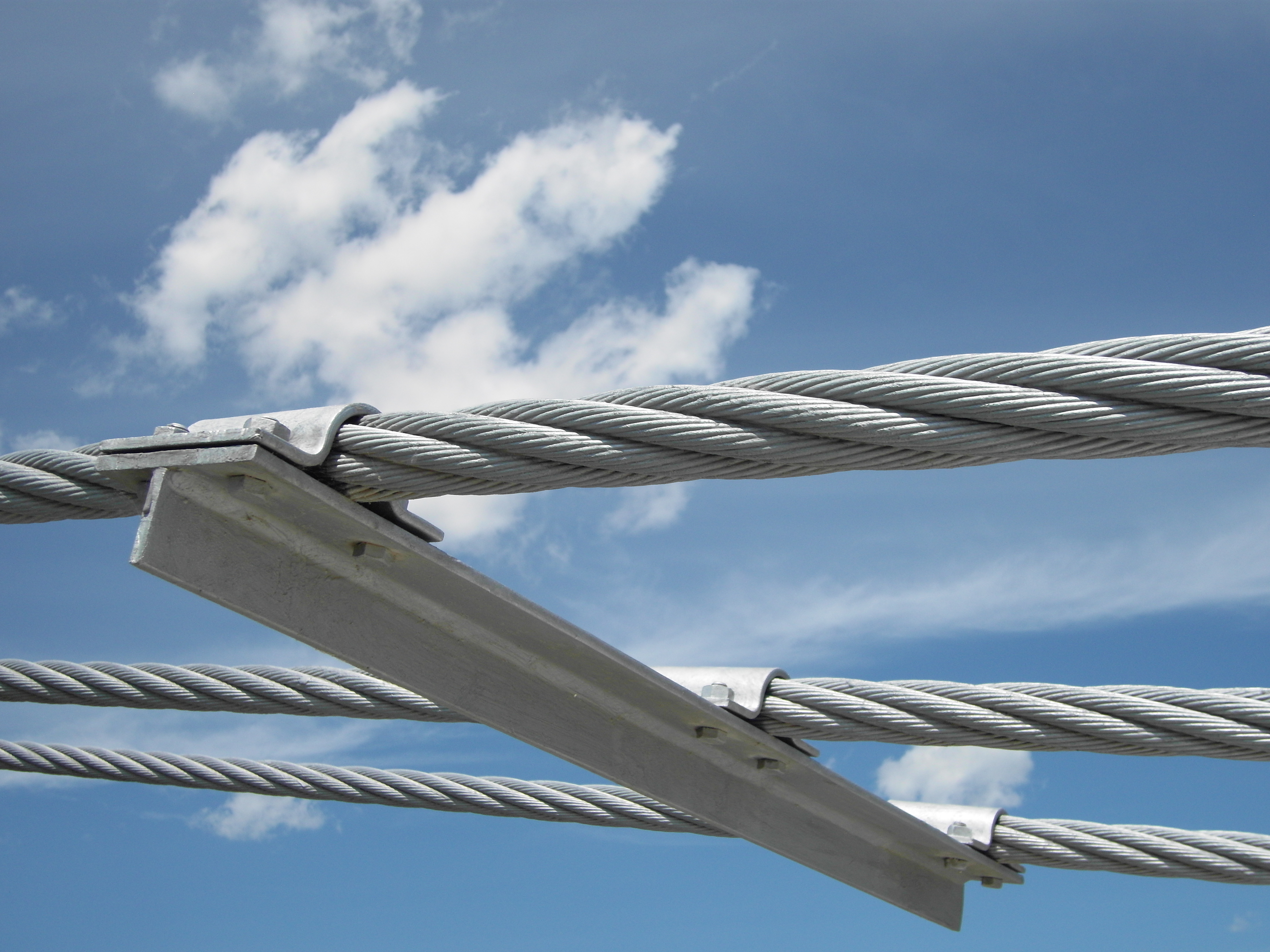
A close up look at a wire rope configuration can reveal coating challenges.

  1. Wire rope’s are made woven strands of galvanized (in most cases) steel wire .
  2. A bundle of wire rope strands have voids between them which film form coatings cannot fill.
  3. When the wire ropes twists, the coating must follow.
  • Hard film formers leave micro-voids between paint and substrate.
  • Hard film formers crack when the cable twists, etc.
  • All fill formers are moisture vapor permeable. Moisture is a bad thing with benign film formers because the coating can trap it within the strand.
  • Suspender cables are arched, suspension cables and hanger cables are vertical, therefore, any humidity inside the bundle will migrate downward to gather at the lowest point (socket, anchor, lowest point).
  • Pin connectors, spacers, shackles and anchors are all vulnerable to the development of crevice corrosion.

Characteristics of a Sound Wire Rope Corrosion Mitigation Solution.

  1. Ability to fill microvoids with a chemically active corrosion inhibitor.
  2. Ability to stay active and move within the strand.
  3. Ability to displace moisture away from the steel AND neutralize any corrosive acids present.
  4. Ability to protect the wire rope from the elements.

HRCSA – Chemically Active Coatings.

  1. Bonds through polar
  2. Fills the voids between strands.
  3. Internal HRCSA treatment: Stays chemically active and if applied using pressure (conformant to specifications), will fill all voids, remain active, and thoroughly wet out all strands during loading and unloading
  4. Internal HRCSA treatments are field proven to provide a 25-30 year service life.
  5. Exterior HRCSA treatment: Is elastomeric and stays flexible, is purposely designed to chemically meld with internal HRCSA treatment, adding yet another layer of chemically active acid neutralizing chemistry.
  6. Mid-level HRCSA treatment: (formed when the internal and external chemistry combine), provide an additional layer of protection and enhanced chemically active (slow curing) protection.

HRCSA internal Treatment Methods

HRCSA Internal Treatment Pressure Applicator

HRCSA External Treatment Application

Single Component HRCSA topcoat for wire rope being applied by paint mitt.

Wire Rope Surface Preparation

SAMSUNG DIGITAL CAMERA

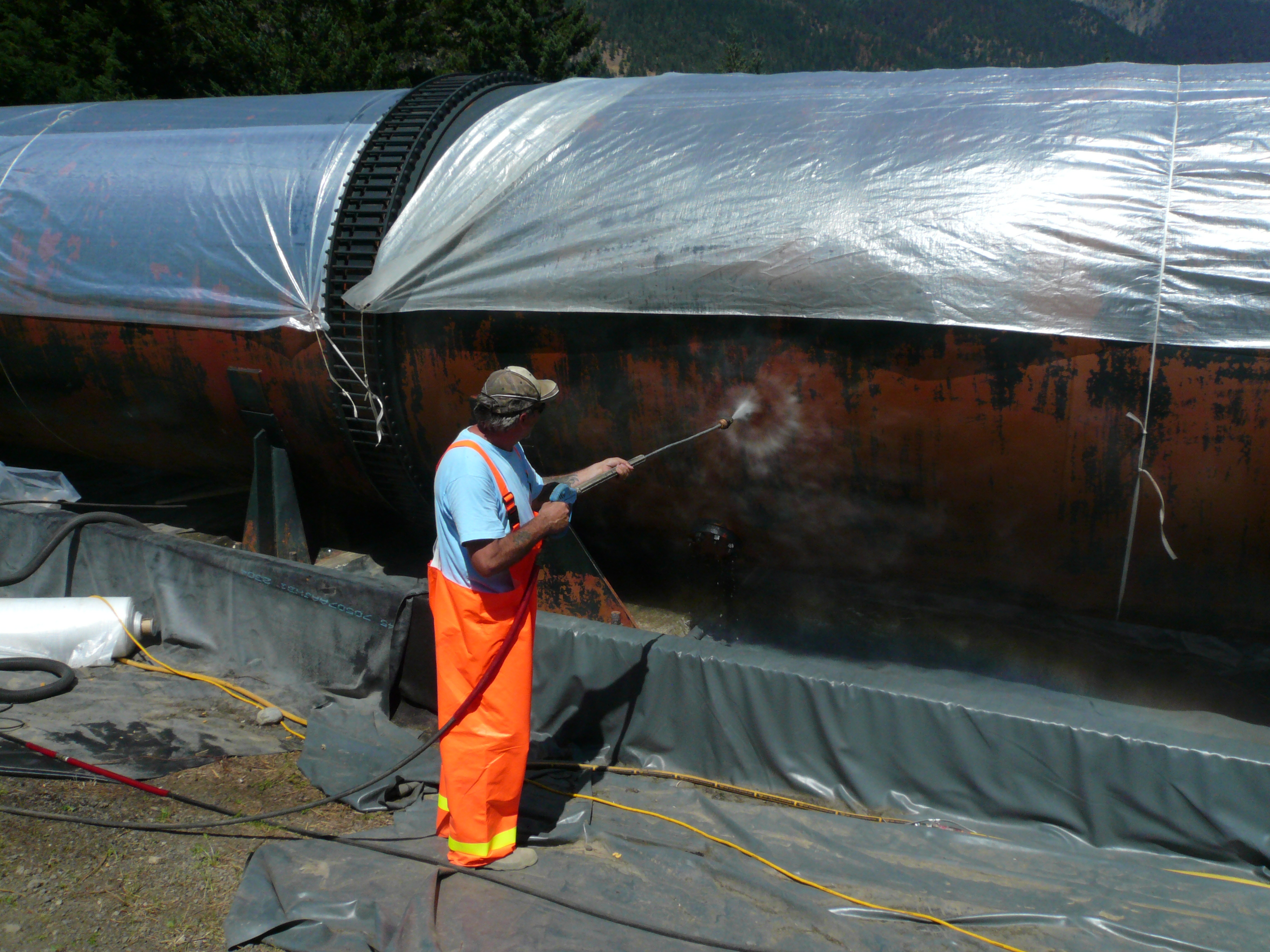
Wire Rope High Pressure Water Cleaner.

Or mechanically using 3M Buff Pad, Right Angle Sander

Mitigating Salts

If high pressure water cleaning, include a salt remover additive in your mix and be sure to use a cleaner that includes pressurized air to clear water from between the strands.

If sanding out corrosion hotspots, always wipe your wire rope with solvent soaked rag before overcoating with HRCSA topcoat.

Do you have a project? Schedule a meeting.

[contact-field required="1" type="name" label="Name"/] [contact-field required="1" type="email" label="Email"/] [contact-field required="1" type="telephone" label="Phone"/] [contact-field label="Date" required="1" type="date"/] [contact-field label="Time" required="1" options="Morning,Afternoon" type="radio"/] [contact-field label="Notes" type="textarea"/]

Mitigating Crevice Corrosion and Pack Rust

Posted on

There are no words to describe how seeing this a year after abrasive blasting and applying 3 coats makes the owner feel… <disappointed>, <resigned>, <frustrated>, <deceived>

HRCSA: Preserving Steel

When dealing with aged, in-place, corroded structures, traditional film-form coatings do not have the right chemistry needed to stop pack-rust growth.

When bearings freeze due to corrosion, pressure is introduced to the bridge superstructure.

When corrosion build between plates expands and out of plane bending occurs, the integrity of the structure is put at risk, the rating is affected, and fasteners are weakened.

Structure Critical Corrosion Can Shave Years of Service Life off Your Structure.

For years it was believed that “There is nothing you could do about rust bleed leaking from connections.” until as recently as 30 years ago when HRCSA formulations were created specifically to chemically step active corrosion inside connections. Although the HRCSA Self-priming topcoat is applied stand-alone on exposed steel substrate, there is one specific area where it it is provided a boost: inside pack-rusted joints and connections and other steel openings.

Four Simple Steps for Extending the Service Life of Your Steel Assets.

Step 1: High pressure water clean with salt remover to produce a clean, tightly adhered substrate and flushed joints and connections.

Step 2: Apply high pressure air to remove water and humidity from surfaces and inside connections

Step 3: Apply HRCSA Penetrant under pressure to fill capillary channels inside connections.

Step 4: Apply HRCSA Self-Priming Topcoat to Penetrant treated connections, rivet heads and sharp angles using a brush. Overcoat the entire structure.

The photo at the bottom is that of an HRCSA treated pack-rusted connection after 17 years in service.

The HRCSA melding process is achieved by first saturating, flushing, and blowing out connections and then flooding the inside of the connections with low viscosity HRCSA Penetrant/Sealer under pressure. This material chemically treats corrosion causing acids inside the crevice corroded or pack rusted joints or connections. Once applied, this material will remain chemically active inside the connection for as long as it is sealed in by the HRCSA Self-Priming Topcoat. Together, they form a mid-layer of chemistry we call the “meld zone”. This meld-zone serves as a chemical reserve that is a continuous source of corrosion-fighting chemistry as HRCSA continually wicks it way deeper and deeper into the crevice during structural movement (expansion and contraction). When this process is applied to bearing plates, the HRCSA chemistry applies lubricity as it frees up corrosion frozen bearings.

Why not stop all corrosion – including crevice corrosion?

[contact-field required="1" type="name" label="Name"/] [contact-field required="1" type="email" label="Email"/] [contact-field required="1" type="telephone" label="Phone"/] [contact-field label="Date" required="1" type="date"/] [contact-field label="Time" required="1" options="Morning,Afternoon" type="radio"/] [contact-field label="Notes" type="textarea"/]

Overcoating Steel Structures

Posted on

Different Technologies, Different Outcomes.

Traditional cross-linking overcoating systems adhere by chemical-mechanical reaction which means that THEY shrink more and more over time stressing the existing overcoated substrate paint systems whereas HRCSA does not shrink meaning that HRCSA overcoated substrate paints will not lift away from the steel as time passes on.

HRCSA overcoat systems adhere through polar bonding and are not reliant on chemical nor mechanical reactions for adhesion producing a low surface energy bond without risk of existing coating delamination.

HRCSA Self-priming topcoat.

Because HRCSA is a chemically active, surface tolerant system, it can be applied to any existing tightly adhered cleaned, salt and black oxide free substrate (avoid applying over rubber or uncured tar). In addition, HRCSA can overcoat tightly adhered, contaminant-free existing coating systems.

Due to HRCSA’s low surface energy, the risk of delamination caused by shrinkage from traditional overcoat systems is very low.

During open forum discussions about structure critical corrosion with chief structural engineers at the Federal Highway and with state bridge authorities, the engineers were disapproving of how ineffective painting structures with traditional barrier coating systems is. Especially with regard to particularly stopping rust bleeding at the crevice corroded connections and corrosion-frozen moving parts and long term reliability.

The low surface energy HRCSA self-priming topcoat does not ‘tug and pull’ (long term) existing substrate coatings – a characteristic that is especially important in cold weather conditions.

The chemically active aspect for the HRCSA self-priming topcoat’s cousin (HRCSA active Penetrant) is field proven to stop structure critical corrosion inside complex joints and connections, moving parts and wire rope.

To discuss a specific project you are considering, please register and the manufacturing licensee in your territory will be notified. Thank you.

[contact-field required="1" type="name" label="Name"/] [contact-field required="1" type="email" label="Email"/] [contact-field required="1" type="telephone" label="Phone"/] [contact-field label="Date" required="1" type="date"/] [contact-field label="Time" required="1" options="Morning,Afternoon" type="radio"/] [contact-field label="Notes" type="textarea"/]

Rapid Deployment Corrosion Mitigation

Posted on

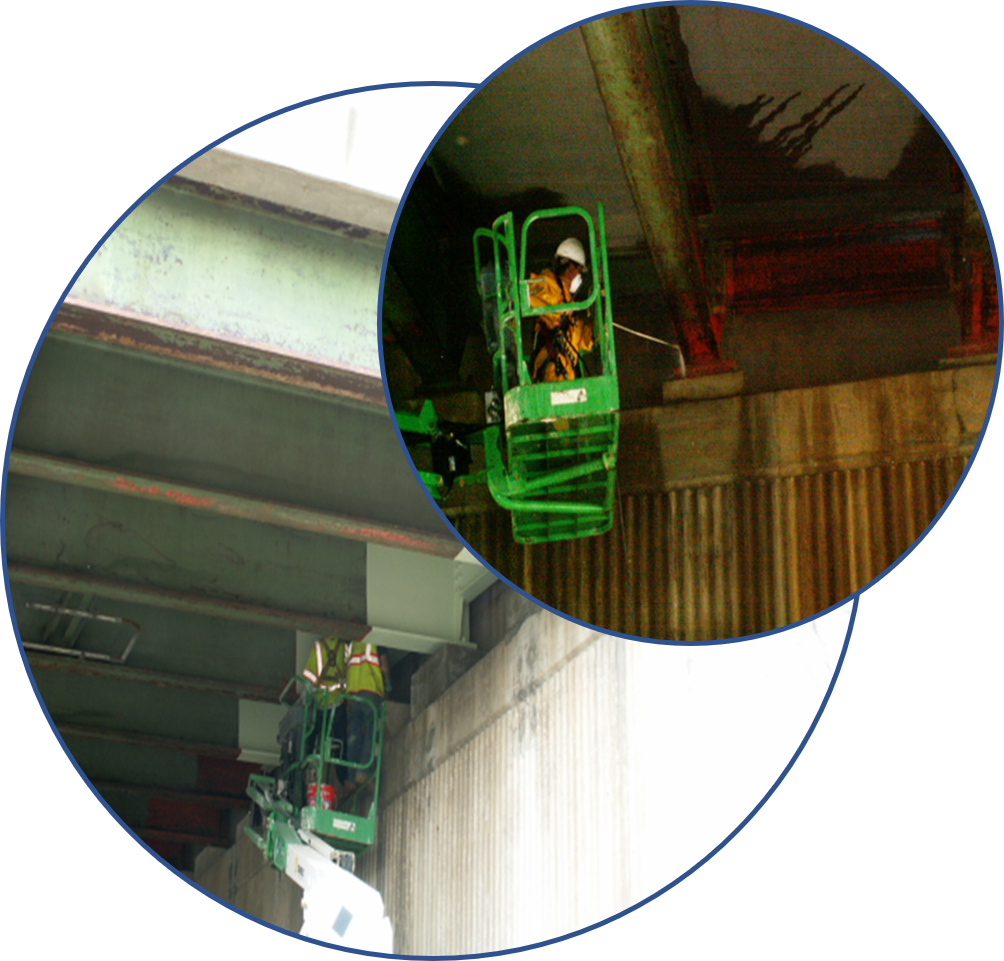
With the HRCSA corrosion mitigation system, Bridge Owners are rapidly mitigating corrosion on beam ends and bearings with minimal traffic disruptions.

With the environmentally clean HRCSA process and chemistry, containment is not an issue when high-pressure water cleaned (with salt remover) steel substrates are force air dried and treated with HRCSA chemistry quickly, effectively and without delays.

Specifications for projects (above).

A 22 meter long, 9 girder wide bridge superstructure corrosion mitigated inside a week.

This 22 meter long bridge with nine 1.5 meter wide girders was surface prepared and corrosion mitigation treated with HRCSA inside a week.

Surface Preparation – High Pressure Water Cleaning.
(Rotating tip and salt remover additive)

Beginning at one end, the steel substrate was high pressure water cleaned with 4.8 Mpa hot water, rotating tip with salt remover additive. Black oxides were hand tool cleaned before washing. Surface preparation on the full length of all 9 girders was completed inside 3 days.

Surface preparation was done heading in 1 direction. The single coat, single component HRCSA self-priming topcoat was airless spray applied during the return trip – all inside one business day.

The work included chemical treatment of all joints, connections and bridge bearings. Worth mentioning that a train was scheduled to pass twice a day so scaffolding was designed to accommodate this traffic.

Train man confirming tracks were clear. 2 trains passed per day.

To Schedule a Discussion Regarding a Steel Corrosion Project, Schedule here.

[contact-field required="1" type="name" label="Name"/] [contact-field required="1" type="email" label="Email"/] [contact-field required="1" type="telephone" label="Phone"/] [contact-field label="Date" required="1" type="date"/] [contact-field label="Time" required="1" options="Morning,Afternoon" type="radio"/] [contact-field label="Notes" type="textarea"/]

Thank you for your interest in Single Coat HRCSA corrosion mitigation system.