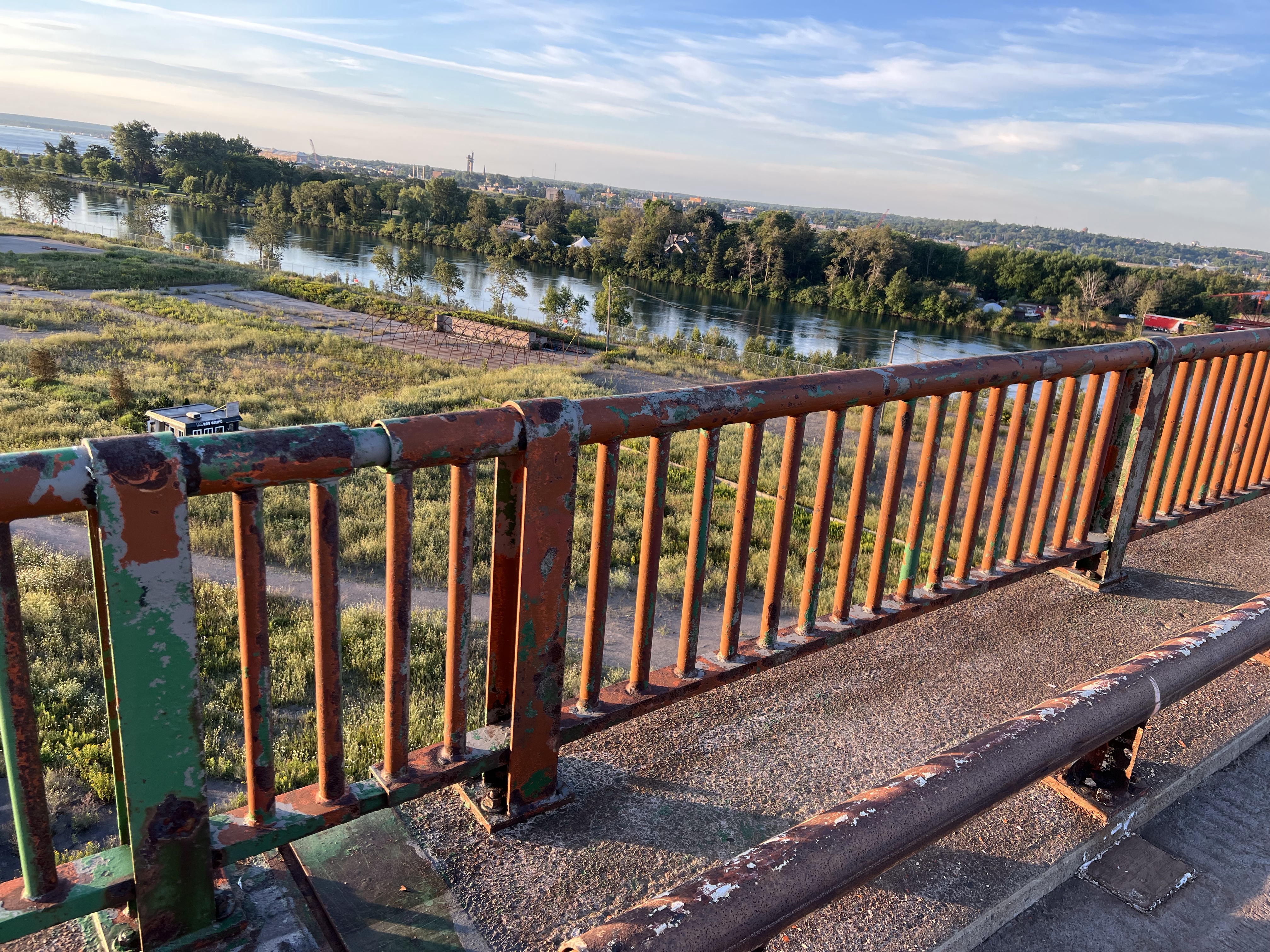
Last week, a painting project to coat the Canadian side of the Sault Ste. Marie International Bridge began, using a one-coat paint system.
The steel truss arch bridge spans the St. Mary’s River between Sault Ste. Marie, Michigan, and Sault Ste. Marie, Ontario, and is the only vehicular crossing between those locations within a 300-mile distance. The structure is also the largest trade crossing in Northwestern Ontario, playing a “vital role” for both Soo communities, according to the bridge’s website.
Latest Coating Work
The $3 million painting project will coat the curb and service walk railing on the Canadian half of the bridge. Work is being completed by prime contractor source: https://www.paintsquare.com/news/view/?25293
For the coatings, the contractor will use a high-ratio calcium sulfonate alkyd (HRCSA) one-coat paint system.
“This innovative product and process offers many benefits,” said Bridge Engineer Karl Hansen. “We anticipate cost savings, enhanced corrosion resistance, quicker completion time, and minimized disturbance to the environment and our customers.”
Last week, a painting project to coat the Canadian side of the Sault Ste. Marie International Bridge began, using a one-coat paint system.
Sault Ste. Marie International Bridge
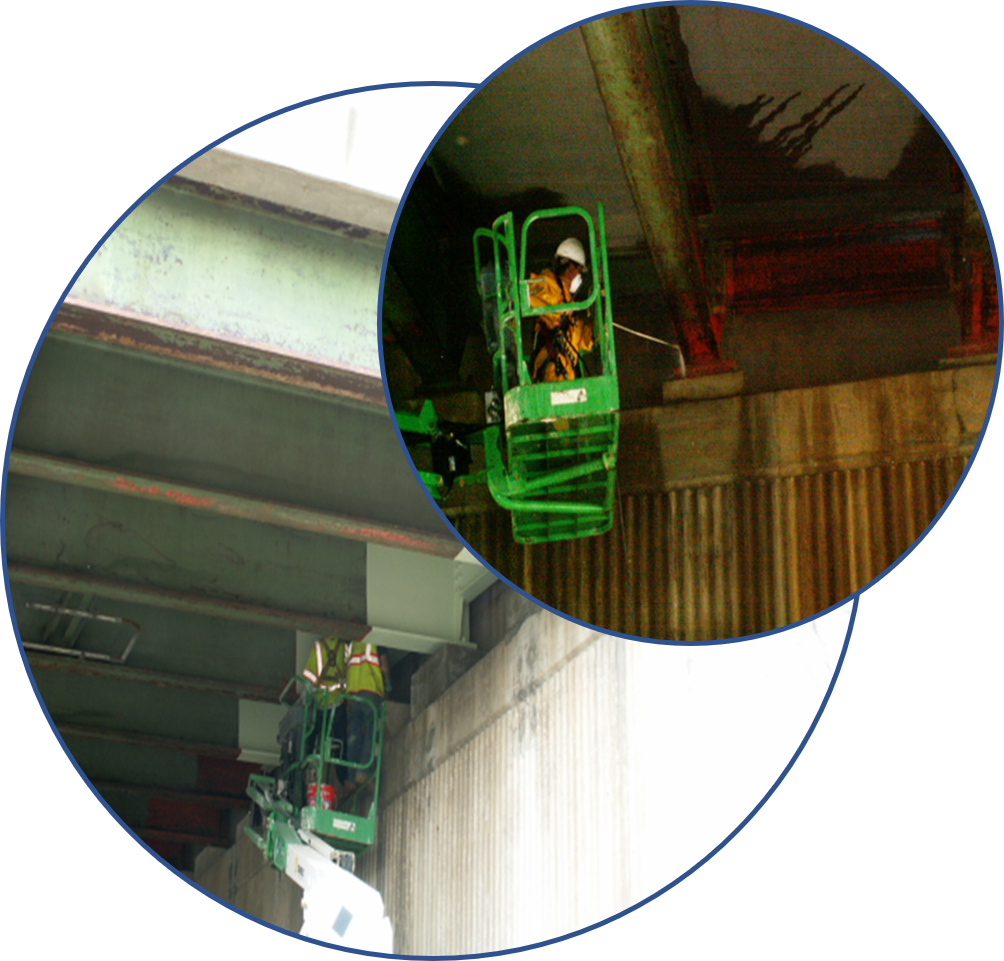
According to the release, painting operations will be conducted at various locations around the Canadian side using moveable scaffolding. One lane of alternating traffic will be maintained during the painting.
“The International Bridge Administration (IBA) advises motorists to expect delays, remain alert for workers, and use caution when traveling through the work zone,” writes the IBA.
The project is fully funded through the Federal Bridge Corp. Limited with the help of a capital budget allocation approved by the Government of Canada. Work is expected to be completed by Nov. 1.
Previous Bridge Work
(Post-Interview video with contractor Matt Glavin, http://www.glavin.net, regarding his personal experience of working with HRCSA on the Canadian side of the Sault Ste. Marie bridge arch.)
Traditional cross-linking overcoating systems adhere by chemical-mechanical reaction which means that THEY shrink more and more over time stressing the existing overcoated substrate paint systems whereas HRCSA does not shrink meaning that HRCSA overcoated substrate paints will not lift away from the steel as time passes on.
HRCSA overcoat systems adhere through polar bonding and are not reliant on chemical nor mechanical reactions for adhesion producing a low surface energy bond without risk of existing coating delamination.
HRCSA Self-priming topcoat.
Because HRCSA is a chemically active, surface tolerant system, it can be applied to any existing tightly adhered cleaned, salt and black oxide free substrate (avoid applying over rubber or uncured tar). In addition, HRCSA can overcoat tightly adhered, contaminant-free existing coating systems.
Due to HRCSA’s low surface energy, the risk of delamination caused by shrinkage from traditional overcoat systems is very low.
During open forum discussions about structure critical corrosion with chief structural engineers at the Federal Highway and with state bridge authorities, the engineers were disapproving of how ineffective painting structures with traditional barrier coating systems is. Especially with regard to particularly stopping rust bleeding at the crevice corroded connections and corrosion-frozen moving parts and long term reliability.
The low surface energy HRCSA self-priming topcoat does not ‘tug and pull’ (long term) existing substrate coatings – a characteristic that is especially important in cold weather conditions.
The chemically active aspect for the HRCSA self-priming topcoat’s cousin (HRCSA active Penetrant) is field proven to stop structure critical corrosion inside complex joints and connections, moving parts and wire rope.
With the HRCSA corrosion mitigation system, Bridge Owners are rapidly mitigating corrosion on beam ends and bearings with minimal traffic disruptions.
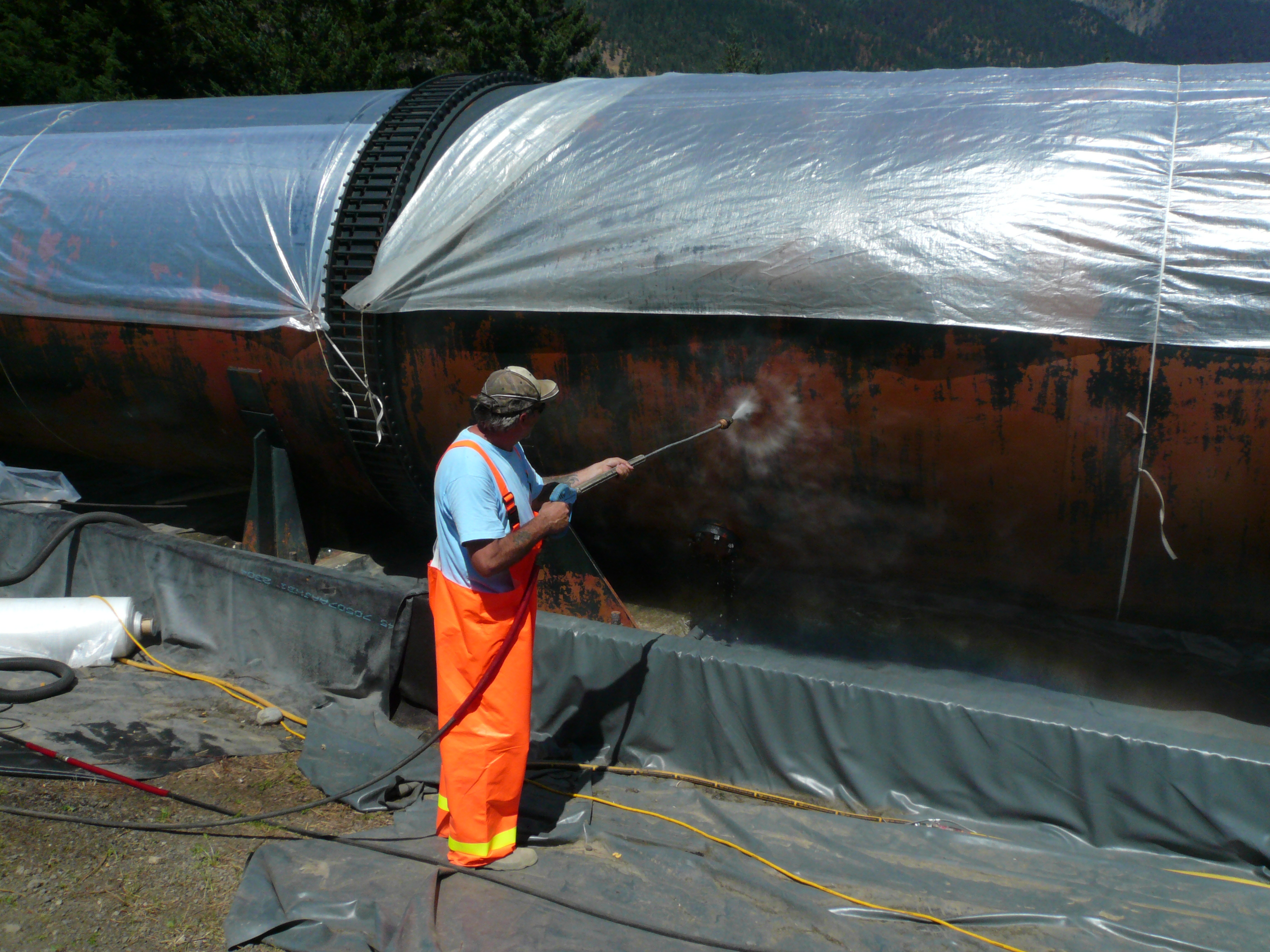
With the environmentally clean HRCSA process and chemistry, containment is not an issue when high-pressure water cleaned (with salt remover) steel substrates are force air dried and treated with HRCSA chemistry quickly, effectively and without delays.
A 22 meter long, 9 girder wide bridge superstructure corrosion mitigated inside a week.
This 22 meter long bridge with nine 1.5 meter wide girders was surface prepared and corrosion mitigation treated with HRCSA inside a week.
Surface Preparation – High Pressure Water Cleaning. (Rotating tip and salt remover additive)
Beginning at one end, the steel substrate was high pressure water cleaned with 4.8 Mpa hot water, rotating tip with salt remover additive. Black oxides were hand tool cleaned before washing. Surface preparation on the full length of all 9 girders was completed inside 3 days.
Surface preparation was done heading in 1 direction. The single coat, single component HRCSA self-priming topcoat was airless spray applied during the return trip – all inside one business day.
The work included chemical treatment of all joints, connections and bridge bearings. Worth mentioning that a train was scheduled to pass twice a day so scaffolding was designed to accommodate this traffic.
Train man confirming tracks were clear. 2 trains passed per day.
To Schedule a Discussion Regarding a Steel Corrosion Project, Schedule here.