HRCSA Coating Life Expectancy

Posted on

Coating life expectancy.

Japanese and American lab tests predict that the HRCSA coating system (250 microns recoat) will last 40+ years in the field.

Field erosion tests measured losses at a rate of 25 microns every 5,6 years.

Unfortunately, none of these performance predictions mean anything if the structure they are being applied to is being torn apart by structure critical corrosion.

Primary Reasons For Collapses.

Bent plates, loss of fasteners, loss of section, weakened girders, Ongoing section loss due to corrosion can negatively impact load ratings over time.

Corrosion frozen moving parts induce great stress to the superstructure and may induce microcracking, bending and misalignment of critical components.

Corrosion within the strands can affect structural integrity and load carrying capabilities. [PS: HRCSA offers OUTSTANDING wire rope coating solutions! Enquire below.]

Leaking expansion joints affect piers, bearings, bends, superstructure and substructure elements.

“Threats to Coating Service life.”

Damage / Abrasion / Impact / undercutting

Ph environment, de-icing salts, atmospheric pollution.

Preservation’s primary objective is to extend the service life and utility of existing assets.

  • Cost effective and easily deployed with least amount of delay to the users.
  • HRCSA is 30 year field proven to help solve the specific corrosion issues identified above.

Ask Your Supplier:

  • Does the coating system you propose solve the potential or actual structure critical corrosion problems that are present on my asset?
  • Does the proposed coating system demonstrate the proven ability to chemically stop crevice corrosion, pack rust, free corrosion frozen bearings, on structures with complex geometries and inaccessible areas to stop section loss and compromises to structural integrity?
  • How does your proposed coating systems’ chemistry deal with crevice corrosion, pack rust, corrosion frozen bearings, and complex geometries?
  • What testing, field experience, and case histories can you provide to confirm your system’s demonstrated ability to mitigate the above-mentioned corrosion issues?
  • How is your system cost effective and rapidly deployed to minimize user delays?
  • Do you have peer reviewed publications to back your claims?
  • What type of performance warranty has your solution offering been tied to and can you provide a written example?

Do you have a project in mind? Schedule a meeting.

← Back

Thank you for your response. ✨

Time(required)

Wire Rope

Posted on

Wire Rope Coatings:
It’s complicated… – until it isn’t.

.

The Wire Rope Corrosion Mitigation Challenges.

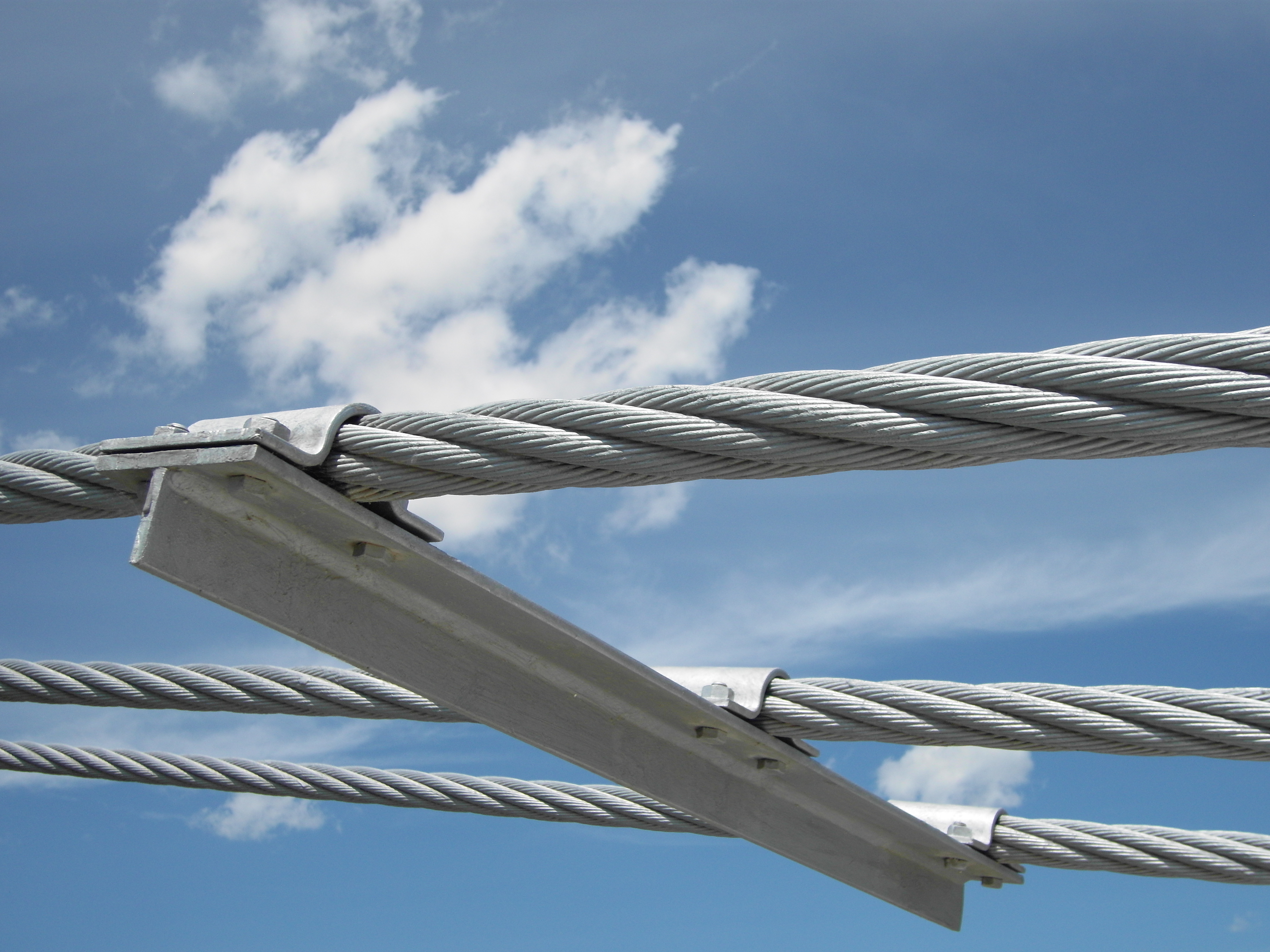
A close up look at a wire rope configuration can reveal coating challenges.

  1. Wire rope’s are made woven strands of galvanized (in most cases) steel wire .
  2. A bundle of wire rope strands have voids between them which film form coatings cannot fill.
  3. When the wire ropes twists, the coating must follow.
  • Hard film formers leave micro-voids between paint and substrate.
  • Hard film formers crack when the cable twists, etc.
  • All fill formers are moisture vapor permeable. Moisture is a bad thing with benign film formers because the coating can trap it within the strand.
  • Suspender cables are arched, suspension cables and hanger cables are vertical, therefore, any humidity inside the bundle will migrate downward to gather at the lowest point (socket, anchor, lowest point).
  • Pin connectors, spacers, shackles and anchors are all vulnerable to the development of crevice corrosion.

Characteristics of a Sound Wire Rope Corrosion Mitigation Solution.

  1. Ability to fill microvoids with a chemically active corrosion inhibitor.
  2. Ability to stay active and move within the strand.
  3. Ability to displace moisture away from the steel AND neutralize any corrosive acids present.
  4. Ability to protect the wire rope from the elements.

HRCSA – Chemically Active Coatings.

  1. Bonds through polar
  2. Fills the voids between strands.
  3. Internal HRCSA treatment: Stays chemically active and if applied using pressure (conformant to specifications), will fill all voids, remain active, and thoroughly wet out all strands during loading and unloading
  4. Internal HRCSA treatments are field proven to provide a 25-30 year service life.
  5. Exterior HRCSA treatment: Is elastomeric and stays flexible, is purposely designed to chemically meld with internal HRCSA treatment, adding yet another layer of chemically active acid neutralizing chemistry.
  6. Mid-level HRCSA treatment: (formed when the internal and external chemistry combine), provide an additional layer of protection and enhanced chemically active (slow curing) protection.

HRCSA internal Treatment Methods

HRCSA Internal Treatment Pressure Applicator

HRCSA External Treatment Application

Single Component HRCSA topcoat for wire rope being applied by paint mitt.

Wire Rope Surface Preparation

SAMSUNG DIGITAL CAMERA

Wire Rope High Pressure Water Cleaner.

Or mechanically using 3M Buff Pad, Right Angle Sander

Mitigating Salts

If high pressure water cleaning, include a salt remover additive in your mix and be sure to use a cleaner that includes pressurized air to clear water from between the strands.

If sanding out corrosion hotspots, always wipe your wire rope with solvent soaked rag before overcoating with HRCSA topcoat.

Do you have a project? Schedule a meeting.

← Back

Thank you for your response. ✨

Time(required)