Wire Rope

Posted on

Wire Rope Coatings:
It’s complicated… – until it isn’t.

.

The Wire Rope Corrosion Mitigation Challenges.

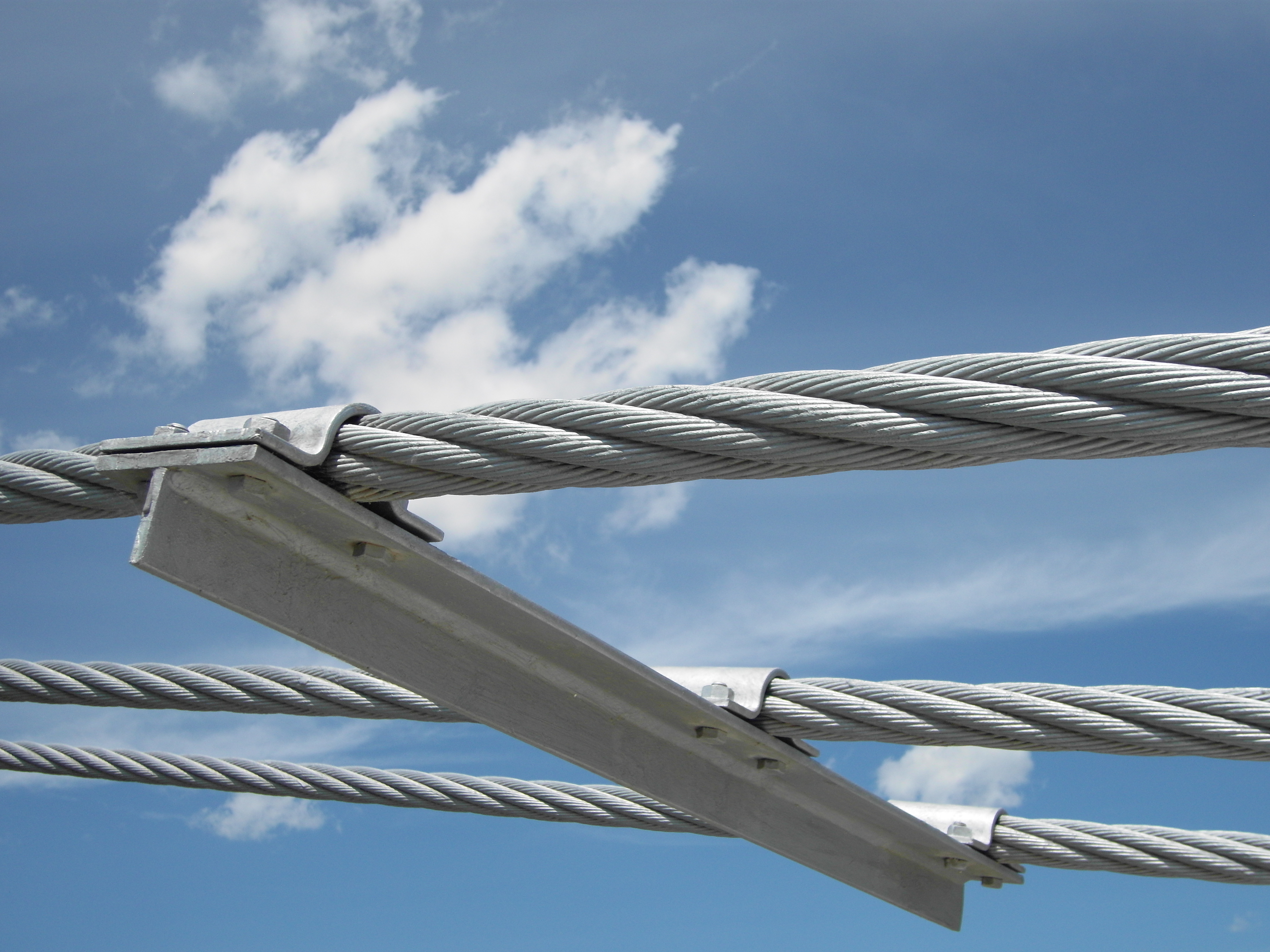
A close up look at a wire rope configuration can reveal coating challenges.

  1. Wire rope’s are made woven strands of galvanized (in most cases) steel wire .
  2. A bundle of wire rope strands have voids between them which film form coatings cannot fill.
  3. When the wire ropes twists, the coating must follow.
  • Hard film formers leave micro-voids between paint and substrate.
  • Hard film formers crack when the cable twists, etc.
  • All fill formers are moisture vapor permeable. Moisture is a bad thing with benign film formers because the coating can trap it within the strand.
  • Suspender cables are arched, suspension cables and hanger cables are vertical, therefore, any humidity inside the bundle will migrate downward to gather at the lowest point (socket, anchor, lowest point).
  • Pin connectors, spacers, shackles and anchors are all vulnerable to the development of crevice corrosion.

Characteristics of a Sound Wire Rope Corrosion Mitigation Solution.

  1. Ability to fill microvoids with a chemically active corrosion inhibitor.
  2. Ability to stay active and move within the strand.
  3. Ability to displace moisture away from the steel AND neutralize any corrosive acids present.
  4. Ability to protect the wire rope from the elements.

HRCSA – Chemically Active Coatings.

  1. Bonds through polar
  2. Fills the voids between strands.
  3. Internal HRCSA treatment: Stays chemically active and if applied using pressure (conformant to specifications), will fill all voids, remain active, and thoroughly wet out all strands during loading and unloading
  4. Internal HRCSA treatments are field proven to provide a 25-30 year service life.
  5. Exterior HRCSA treatment: Is elastomeric and stays flexible, is purposely designed to chemically meld with internal HRCSA treatment, adding yet another layer of chemically active acid neutralizing chemistry.
  6. Mid-level HRCSA treatment: (formed when the internal and external chemistry combine), provide an additional layer of protection and enhanced chemically active (slow curing) protection.

HRCSA internal Treatment Methods

HRCSA Internal Treatment Pressure Applicator

HRCSA External Treatment Application

Single Component HRCSA topcoat for wire rope being applied by paint mitt.

Wire Rope Surface Preparation

SAMSUNG DIGITAL CAMERA

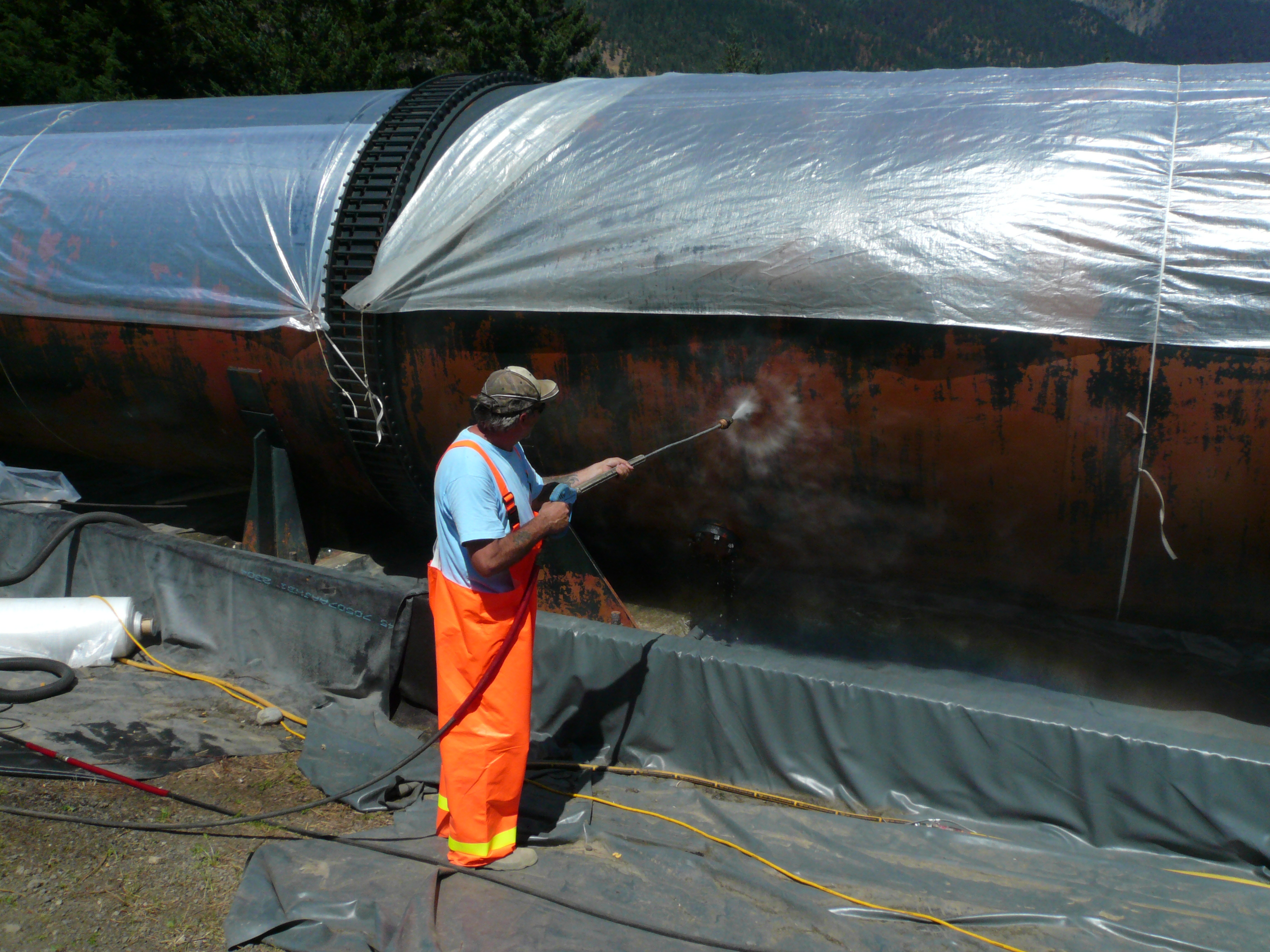
Wire Rope High Pressure Water Cleaner.

Or mechanically using 3M Buff Pad, Right Angle Sander

Mitigating Salts

If high pressure water cleaning, include a salt remover additive in your mix and be sure to use a cleaner that includes pressurized air to clear water from between the strands.

If sanding out corrosion hotspots, always wipe your wire rope with solvent soaked rag before overcoating with HRCSA topcoat.

Do you have a project? Schedule a meeting.

← Back

Thank you for your response. ✨

Time(required)

Overcoating Steel Structures

Posted on

Different Technologies, Different Outcomes.

Traditional cross-linking overcoating systems adhere by chemical-mechanical reaction which means that THEY shrink more and more over time stressing the existing overcoated substrate paint systems whereas HRCSA does not shrink meaning that HRCSA overcoated substrate paints will not lift away from the steel as time passes on.

HRCSA overcoat systems adhere through polar bonding and are not reliant on chemical nor mechanical reactions for adhesion producing a low surface energy bond without risk of existing coating delamination.

HRCSA Self-priming topcoat.

Because HRCSA is a chemically active, surface tolerant system, it can be applied to any existing tightly adhered cleaned, salt and black oxide free substrate (avoid applying over rubber or uncured tar). In addition, HRCSA can overcoat tightly adhered, contaminant-free existing coating systems.

Due to HRCSA’s low surface energy, the risk of delamination caused by shrinkage from traditional overcoat systems is very low.

During open forum discussions about structure critical corrosion with chief structural engineers at the Federal Highway and with state bridge authorities, the engineers were disapproving of how ineffective painting structures with traditional barrier coating systems is. Especially with regard to particularly stopping rust bleeding at the crevice corroded connections and corrosion-frozen moving parts and long term reliability.

The low surface energy HRCSA self-priming topcoat does not ‘tug and pull’ (long term) existing substrate coatings – a characteristic that is especially important in cold weather conditions.

The chemically active aspect for the HRCSA self-priming topcoat’s cousin (HRCSA active Penetrant) is field proven to stop structure critical corrosion inside complex joints and connections, moving parts and wire rope.

To discuss a specific project you are considering, please register and the manufacturing licensee in your territory will be notified. Thank you.

← Back

Thank you for your response. ✨

Time(required)

Rapid Deployment Corrosion Mitigation

Posted on

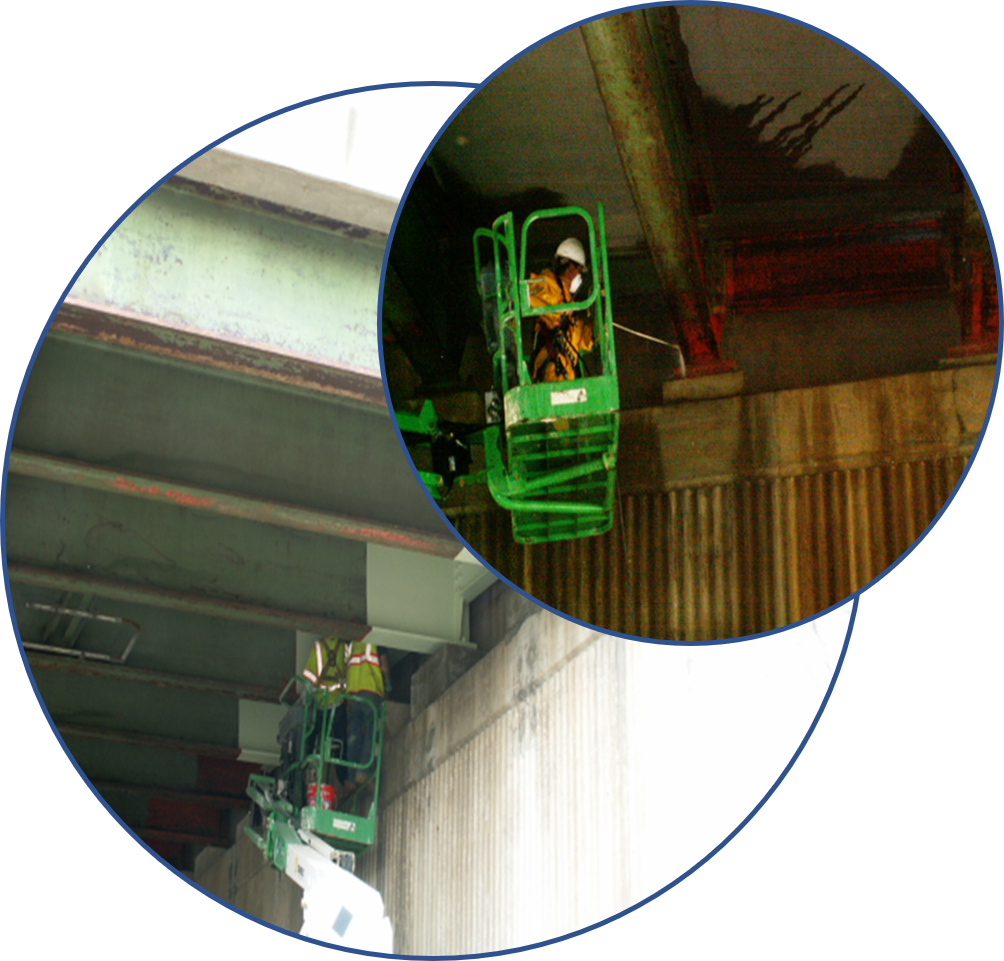
With the HRCSA corrosion mitigation system, Bridge Owners are rapidly mitigating corrosion on beam ends and bearings with minimal traffic disruptions.

With the environmentally clean HRCSA process and chemistry, containment is not an issue when high-pressure water cleaned (with salt remover) steel substrates are force air dried and treated with HRCSA chemistry quickly, effectively and without delays.

Specifications for projects (above).

A 22 meter long, 9 girder wide bridge superstructure corrosion mitigated inside a week.

This 22 meter long bridge with nine 1.5 meter wide girders was surface prepared and corrosion mitigation treated with HRCSA inside a week.

Surface Preparation – High Pressure Water Cleaning.
(Rotating tip and salt remover additive)

Beginning at one end, the steel substrate was high pressure water cleaned with 4.8 Mpa hot water, rotating tip with salt remover additive. Black oxides were hand tool cleaned before washing. Surface preparation on the full length of all 9 girders was completed inside 3 days.

Surface preparation was done heading in 1 direction. The single coat, single component HRCSA self-priming topcoat was airless spray applied during the return trip – all inside one business day.

The work included chemical treatment of all joints, connections and bridge bearings. Worth mentioning that a train was scheduled to pass twice a day so scaffolding was designed to accommodate this traffic.

Train man confirming tracks were clear. 2 trains passed per day.

To Schedule a Discussion Regarding a Steel Corrosion Project, Schedule here.

← Back

Thank you for your response. ✨

Time(required)

← Back

Thank you for your response. ✨