In the following bridge preservation project, the HRCSA maintenance coating was applied to a minimally prepared steel substrate (WJ4 || WA1 ) inside a highly condensed period of time (2 weeks of rail line shut-down).
The steel bridge as it WAS before WJ4 || SA1 surface preparation and HRCSA application.
One Year After the Bridge Overcoating Initiative.
Coating Systems: Beautification or Corrosion Mitigation Initiative?
The US Federal Highway Administration strongly promotes maintaining existing infrastructure in a “Good State of Repair”. This has lead to a great emphasis on “doing more with less” by focusing on bridge preservation practices designed around extending the service life of the existing structures. Mitigating corrosion is a big part of this formula.
The British structure featured in today’s discussion reveals how structures can be preserved cost effectively and with minimal preparation – regardless of tight time schedule pressures.
What the sections which were applied to specification look after 7 years. (No undercuttin).
Most areas were prepared and corrosion mitigated to specification.
Some areas were missed during the works (Time constraints, access limitations).
ALL ACTIVE CORROSION HOTSPOTS CAN BE VERY QUICKLY AND EASILY REPAIRED WITH POWER AND HAND TOOL CLEANING.
The two circled areas of concern in this photograph are active corrosion hotspots which showed up after the application of chemically active HRCSA materials that triggered the delaminating of tightly adhered black oxide patches. HRCSA chemistries cause heavily contaminated black oxide spots to detach. (See repair procedure bottom of page).
The browned areas reveal bridge immersion from brackish Ouse River water during two separate floodings.
In the circled area, rust bleeding is coming from where previously salt contaminated delaminating coating was missed during surface preparation before the application of the HRCSA self-priming topcoat. A complete repair of this active corrosion hotspot can be achieved in very short order using a right angle sander, solvent wipe and brushed on application of single component, single coat HRCSA self-priming topcoat.
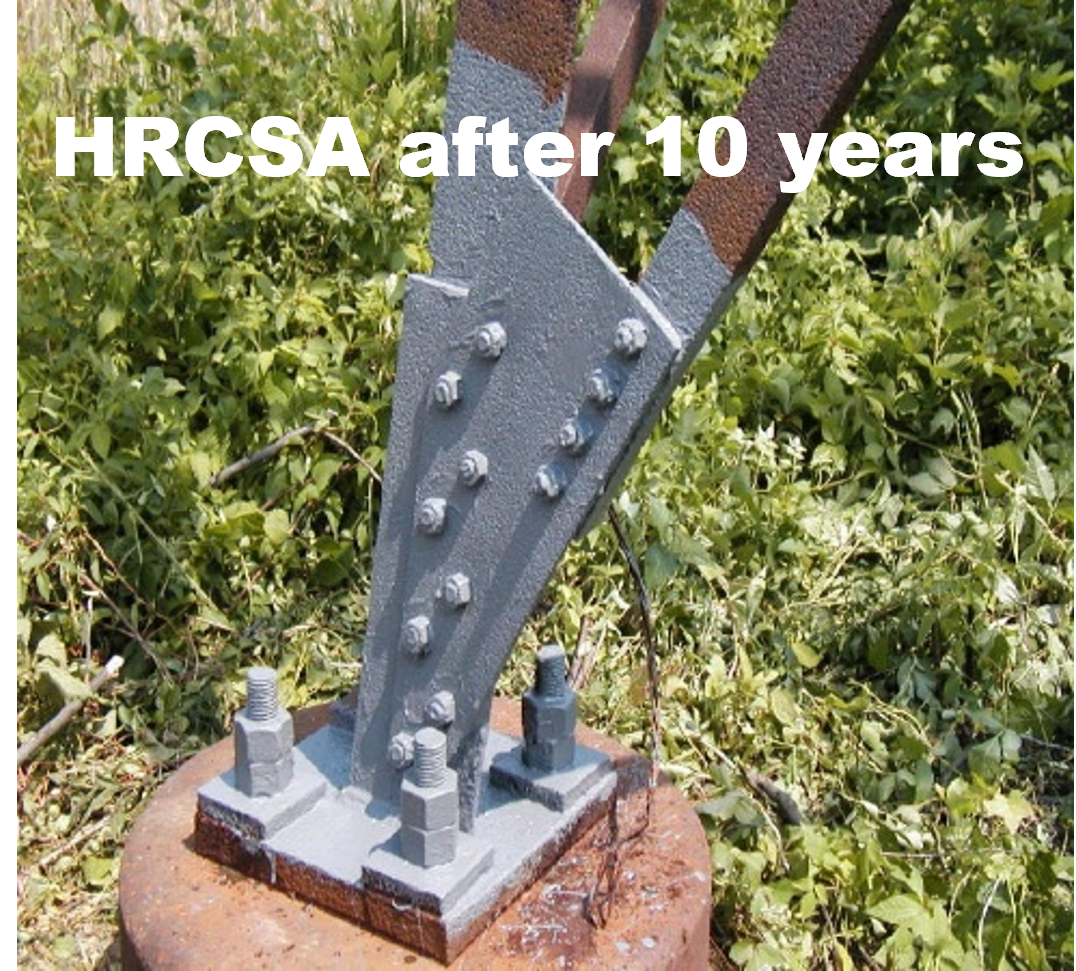
This photo demonstrates the excellent surface wetting and polar bonding of the HRCSA system on heavily pitted and previously heavily corroding substrate (Pressure washed then coated). Salts had been very effectively mitigated during surface preparation else it would have shown through the applied coating material. The coating profile shows no signs of deterioration and is working properly to protect the substrate from the elements.
Another fine example of excellent surface wetting and polar bonding of the HRCSA system to heavily pitted and corroded steel substrate. The coating shows no signs of deterioration and is working properly. Pitted areas (black oxide delaminations) can be quickly and easily repaired using the attached repair procedure below.
Further evidence of discoloration caused by the brackish flood waters as they rose up the side of the girder. Although the coating may be have been discolored there is no corrosion or damage triggered by the brackish floodwaters.
There can be many reasons why hard to reach areas get overlooked during busy works and stressful time constraints. These can include machine failures, weather constraints and so forth. Fortunately, HRCSA repairs can be quick and easy using the repair procedure defined below. [Note: Less than 1% of the surface area was affected.]
In the following examples, inadequate surface preparation and salt removal causing premature coating failures on the sections highlighted below.
Can LED beautification lighting projects lead to premature galvanic corrosion?
The corrosion of structural steel is an electrochemical process that requires the simultaneous presence of moisture and oxygen. Essentially, the iron in the steel is oxidized to produce rust, which occupies approximately six to ten times the volume of the original material. The rate at which the corrosion process progresses depends on a number of factors:
Micro-climate: In the photo above, this bridge is exposed to heavy de-icing salts during the winter. Due to multiple seasonal freezes, thaw cycles there is allot of moisture present which can migrate into the crevices. Result (electrolyte).
To avoid long term damage from crevice corrosion, these are the corrosion risks that could exist in LED lighting installed on steel bridges.
Examples of lighting fixtures applied to bridges.
From a corrosion mitigation point of view, these are the following corrosion risks that we see could exist in LED lighting installed on steel bridges.
LED lights fixture on a galvanized steel plate bolted directly to a carbon steel bridge frame.
Galvanic corrosion (also called bimetallic corrosion or dissimilar metal corrosion) is an electrochemical process in which one metal corrodes preferentially when it is in electrical contact with another, in the presence of an electrolyte.
The aluminum plate interfaced to the copper plate and bolted with a carbon steel nut shows why you need electrical isolation.
Dissimilar metals braced together without insulation lead to corrosion.
Grounding example (dissimilar metals). Do lighting configurations operate on independent floating grounds?
How HRCSA Characteristics help manage LED light installation corrosion:
HRCSA is Non-conductive up to 100KV. Where HRCSA is applied as an electrical insulator between metals, HRCSA can impede the electrochemical process from taking place.
HRCSA Chemistry can insulate connections, so Corrosion has no place to start: The photo below represents BEST PRACTICE for fastening dissimilar metals together. HRCSA Penetrant/Sealer applied under pressure into gaps around the fastener shaft areas followed by a brush applied application of HRCSA self-priming topcoat both between the dissimilar plates as well as overtop the fasteners can help you achieve the same protection.
Repairs are fast & easy: Where existing installations show signs of dissimilar metal corrosion, HRCSA user-friendliness can put affordable and long lasting corrosion mitigation repairs within reach.
Applying HRCSA at the time of installation can be done with little effort.
Conclusion: When attaching dissimilar metals together, HRCSA is a user friendly cost effective alternative for preventing corrosion..
HRCSA: Solving steel corrosion problems others choose to ignore.
Hydro towers are surface prepared by power tool cleaning using angle grinders to remove scale, solvent wipe followed by pressure applied HRCSA Penetrant/Sealer inside the connections (as seen in the photo on left) and HRCSA Self Priming Topcoat by paint brush applied to stripe coat bolts, hard edges and final overcoating the entire zone.
Where A588, COR-TEN steels produce corrosion concerns, Chemically Active HRCSA is becoming the “go to” coating system because of it’s a) minimalistic surface preparation requirements, b) ability to chemically stop crevice corrosion, ability to fully wet weathering steel substrate, d) durability and e) HRCSA IS NON-CONDUCTIVE UP 100KVA – AN IMPORTANT FEATURE FOR COR-TEN TOWERS BECAUSE CORROSION PRODUCTS CAUSE ARCHING ON COR-TEN STEEL TOWERS.
COR-TEN steel performs impressively on flat surfaces, but, like all systems, has limitations – particularly where there are connecting plates and other regions noted below.
Performance & Condition
WeatheringSteel
Performance & Condition
WeatheringSteel
Fatigue Life
Reduced by weathering
Road Salt Effect
Accelerated corrosion and loss of section and mass
Constant Wetting
Corrodes the same as unprotected carbon steel
Appearance Problems
Stains concrete
Faying Surfaces
Corrodes the same as unprotected carbon steel
Sea Coast Environment
Poor corrosion protection, chlorides cause pitting and rapid section loss
Painting
Expensive preparation and excessive paint absorption
Traps moisture inside, resulting in increased corrosion rate
Vegetation
Moisture may accelerate corrosion, especially on faying surfaces, enough to exert excessive force on bolted connections
Inspection
Can’t distinguish patina rust from loose corrosion products of accelerated corrosion
Electrical Industry
Corrosion products cause arcing
Corrosion Rate
Unknown
High humidity/Fog
Poor corrosion protection
More complex joints and connections (such as the above) are surface prepared using power tool cleaning to remove scale then high pressure water cleaned to remove salts, oil, dirt, etc.
Photo above: High pressure water cleaned COR-TEN steel (with salt remover) is ready for HRCSA coating application where HRCSA Penetrant/Sealer is pressure-applied inside the bearing joint and the HRCSA Self-Priming Topcoat is applied (wet-on-wet) to the entire zone to be painted.
Inside Box Beams and other Tubular shapes.
Using a Star tip for fogging and misting HRCSA Penetrant/Sealer is fogged and applied inside Box Beams and other Tubular shapes to create a polar bonded anti-corrosive coating on the inside where humidity can otherwise cause serious corrosion damage.
The capital spend difference between dry abrasive blast equipment with negative air containment and high pressure water cleaning surface preparation equipment (water recovery and flow-through tarps) can slash your overall surface preparation spend by ~ 50%. Naturally, those costs savings can easily be eaten by labor costs if you do not have the right equipment.
Field experience has shown that 480 bar / 23 lpm hot water (60C) with rotating tip provides the ultimate impact, and balance between effectiveness, efficiency and worker safety.
Pressure & Volume:
When it comes to cleaning, pressure alone is not enough – you also need adequate flow to do an effective cleaning job. The pressure is for cleaning, the volume is for washing.
Field experience suggests that 23 lpm (6gpm) +/- 10%) volume does an excellent washing job and a pressure point of 480 bar (min 350) has produced an adequate cleaned steel substrate for overcoating or recoating with HRCSA.
Heat
Makes removal of salts and contaminants from the surface more effective. Here, field experience has shown that 60C does a superb job at optimizing contaminant removal during cleaning.
AP Chemistry
0 Degree Rotating Tip
Field experience confirms that 0 degree rotating tip “Cutting nozzle” is needed to remove undercutted coating systems, flush out corrosion pits and open up capillary channels inside pack-rust corrosion cells located inside joints and connections.
Salt Remover Additives
Combining the above mentioned forces with a salt removing chemistry provides assurance that
Cleaning Oxidized Coins
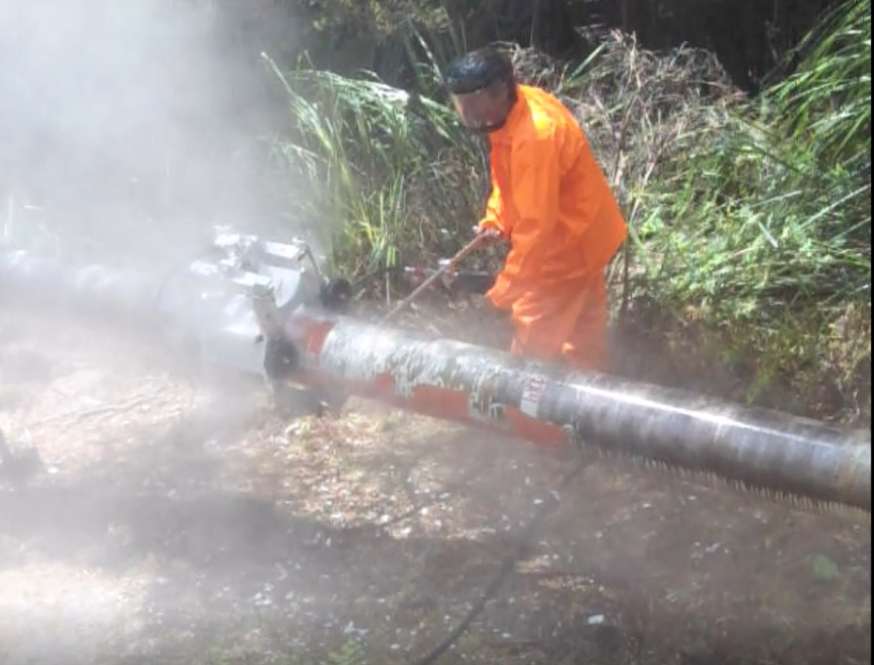
Example of a 480 bar / 23 lpm / hot water with rotating tip cleaning operation at work.
Example of multi-nozzle pressure washing clamp preparing steel for overcoating with HRCSA
Although the vast majority of HRCSA project Surface Preparation is done with High Pressure Water Cleaning and/or hand tool cleaning.
It does happen, on occasion, where abrasive blasting is required (engineer specified, heavy black oxide removal, etc.). Because HRCSA is not profile dependent, the following WAB (Wet Abrasive Blast) configuration using crushed glass has proven quite popular.
Most contractors who work with HRCSA already own 7,000 psi, 6gpm, hot water high pressure water cleaners. They maximize their profits by avoiding the cost of negative air containment [1,000 gallons of fuel / day]. When specifications ask for RECOATING, wet abrasive blasting can be achieved by combining their washers with blasters. Environmentally friendly abrasion can be found with crush glass media.
The magic lies in the quality and design of the injection nozzle used.
Example of WAB (Wet abrasive blasting) using crushed glass media with pressure washer and media injection pot as per above configuration.
Field Application
Field Uses:
Sectional coating removal [To remove lead paint in preparation for welding.]
Can facilitate the removal of thick black oxides.
Photo: It is critical for black oxides to be removed and to mitigate the heavy concentrations of salts at the exposed steel substrate.
NOTE: Hand tools are also used to remove surface black oxides.
Be sure to remove black oxides at all interfaces.
Pack-rusted Joints: Do not blast.
Do not introduce media injection to the corrosion build between plates. High pressure water clean with salt remover only before drying and treating with HRCSA corrosion mitigation chemistry.
NOTE: The corrosion inside a pack-rusted connections to only be high pressure water cleaned with salt remover (then blown dried with clean, dry, 100 psi air pressure). DO NOT introduce abrasives into the pack rust otherwise you will clog the capillary channels. These must remain open.
Is what you are buying authentic HRCSA or a knockoff product?
It happens for us to hear market claims that “A certain product of this same type is being produced in ______ or ______ country.” Nor is it unusual to hear claims that “Our coating product performs equal to or better then HRCSA.” When asked to prove it, these claims always seem to vanish as quickly as they came.
How do you know if what you are getting is conformant to the generic HRCSA specification?
Clear up the Confusion
HRCSA’s 30 year history of field proven notable performance achievements comes from a coating system whose genuine HRCSA (High Ratio Co-Polymerized Calcium Sulfonate).
HRCSA Self Priming Topcoat– High Ratio Co-Polymerized Calcium Sulfonate HRCSA (Minimum 9.5% active sulfonate, must maintain a 9-11 to 1 ± 2% ratio Total Base Number to Active Sulfonate i.e. total base number of 85 to 104 to 9.5% Active Sulfonate as determined by Titration Testing
HRCSA Penetrant (Sealer) – High Ratio Co-Polymerized Calcium Sulfonate HRCSA (Minimum 15% active sulfonate, must maintain a 9-11 to 1 ± 2% ratio Total Base Number to Active Sulfonate ie. total base number of 135 to 165 to 15% Active Sulfonate as determined by Titration Testing
The following 3 downloads provide you with all that you need to test that you are getting what you asked for – and nothing less.
You have the right to receive the field tested, authentic version of the product you were sold.
You have the right to ask to work with unsealed containers.
You have a right to ask for photos of batch numbers of the HRCSA materials received and used on your corrosion mitigation job.
You have a right to ask your licensed manufacturer for certificates of authenticity to confirm that the sealed containers you received conform to the materials specified in your bid documents.
How to Get a 5 Year Joint Corrosion Warranty from your Contractor.
Fill in the following form and an online webinar with your nearest HRCSA licensee will be arranged. (Please allow 2-3 business days.)
Wire Rope Coatings: It’s complicated… – until it isn’t.
.
The Wire Rope Corrosion Mitigation Challenges.
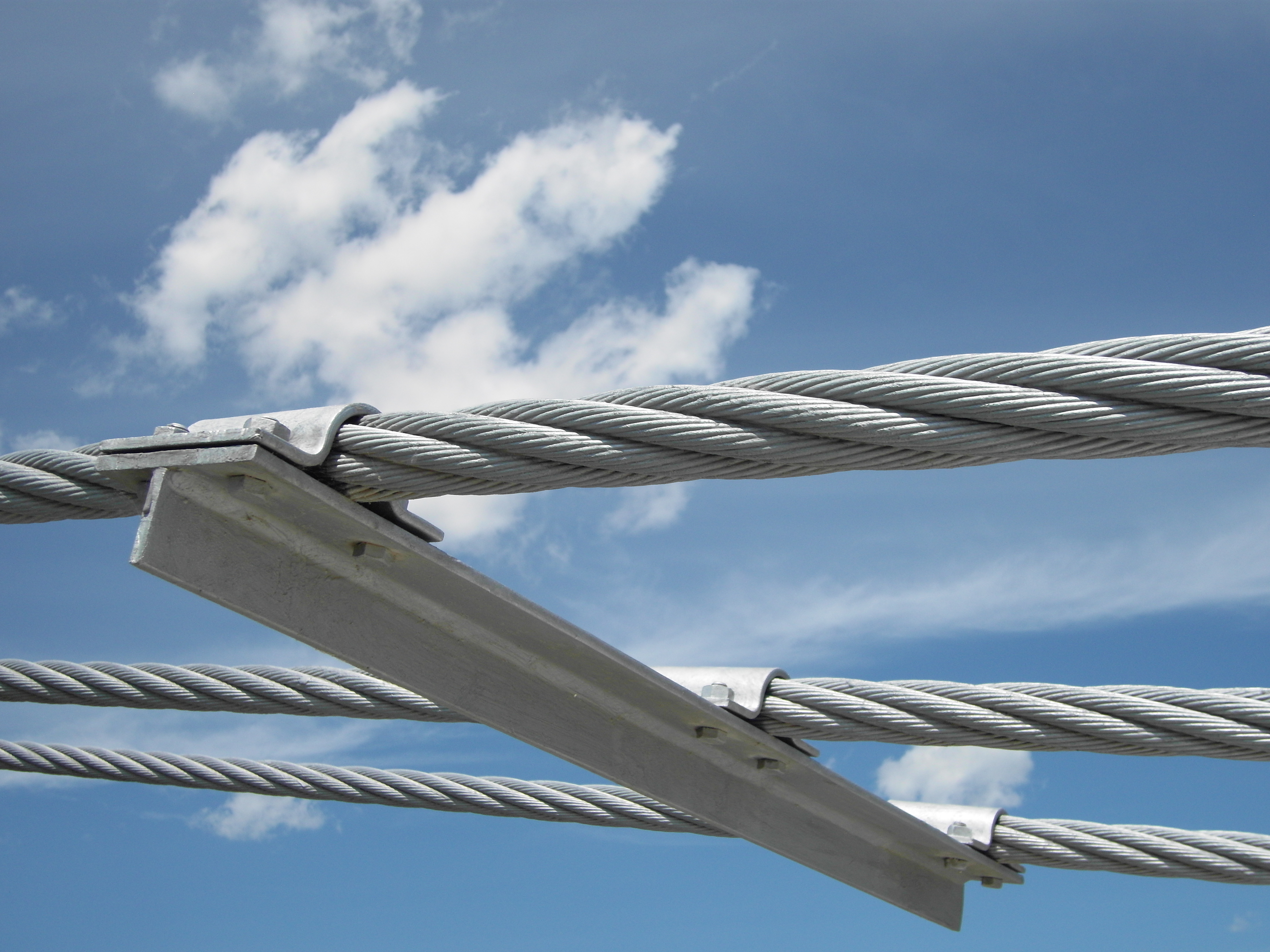
A close up look at a wire rope configuration can reveal coating challenges.
Wire rope’s are made woven strands of galvanized (in most cases) steel wire .
A bundle of wire rope strands have voids between them which film form coatings cannot fill.
When the wire ropes twists, the coating must follow.
Hard film formers leave micro-voids between paint and substrate.
Hard film formers crack when the cable twists, etc.
All fill formers are moisture vapor permeable. Moisture is a bad thing with benign film formers because the coating can trap it within the strand.
Suspender cables are arched, suspension cables and hanger cables are vertical, therefore, any humidity inside the bundle will migrate downward to gather at the lowest point (socket, anchor, lowest point).
Pin connectors, spacers, shackles and anchors are all vulnerable to the development of crevice corrosion.
Characteristics of a Sound Wire Rope Corrosion Mitigation Solution.
Ability to fill microvoids with a chemically active corrosion inhibitor.
Ability to stay active and move within the strand.
Ability to displace moisture away from the steel AND neutralize any corrosive acids present.
Ability to protect the wire rope from the elements.
HRCSA – Chemically Active Coatings.
Bonds through polar
Fills the voids between strands.
Internal HRCSA treatment: Stays chemically active and if applied using pressure (conformant to specifications), will fill all voids, remain active, and thoroughly wet out all strands during loading and unloading
Internal HRCSA treatments are field proven to provide a 25-30 year service life.
Exterior HRCSA treatment: Is elastomeric and stays flexible, is purposely designed to chemically meld with internal HRCSA treatment, adding yet another layer of chemically active acid neutralizing chemistry.
Mid-level HRCSA treatment: (formed when the internal and external chemistry combine), provide an additional layer of protection and enhanced chemically active (slow curing) protection.
HRCSA internal Treatment Methods
HRCSA Internal Treatment Pressure Applicator
HRCSA External Treatment Application
Single Component HRCSA topcoat for wire rope being applied by paint mitt.
Wire Rope Surface Preparation
SAMSUNG DIGITAL CAMERA
Wire Rope High Pressure Water Cleaner.
Or mechanically using 3M Buff Pad, Right Angle Sander
Mitigating Salts
If high pressure water cleaning, include a salt remover additive in your mix and be sure to use a cleaner that includes pressurized air to clear water from between the strands.
If sanding out corrosion hotspots, always wipe your wire rope with solvent soaked rag before overcoating with HRCSA topcoat.
There are no words to describe how seeing this a year after abrasive blasting and applying 3 coats makes the owner feel… <disappointed>, <resigned>, <frustrated>, <deceived>
HRCSA: Preserving Steel
When dealing with aged, in-place, corroded structures, traditional film-form coatings do not have the right chemistry needed to stop pack-rust growth.
When bearings freeze due to corrosion, pressure is introduced to the bridge superstructure.
When corrosion build between plates expands and out of plane bending occurs, the integrity of the structure is put at risk, the rating is affected, and fasteners are weakened.
Structure Critical Corrosion Can Shave Years of Service Life off Your Structure.
For years it was believed that “There is nothing you could do about rust bleed leaking from connections.” until as recently as 30 years ago when HRCSA formulations were created specifically to chemically step active corrosion inside connections. Although the HRCSA Self-priming topcoat is applied stand-alone on exposed steel substrate, there is one specific area where it it is provided a boost: inside pack-rusted joints and connections and other steel openings.
Four Simple Steps for Extending the Service Life of Your Steel Assets.
Step 1: High pressure water clean with salt remover to produce a clean, tightly adhered substrate and flushed joints and connections.
Step 2: Apply high pressure air to remove water and humidity from surfaces and inside connections
Step 3: Apply HRCSA Penetrant under pressure to fill capillary channels inside connections.
Step 4: Apply HRCSA Self-Priming Topcoat to Penetrant treated connections, rivet heads and sharp angles using a brush. Overcoat the entire structure.
The photo at the bottom is that of an HRCSA treated pack-rusted connection after 17 years in service.
The HRCSA melding process is achieved by first saturating, flushing, and blowing out connections and then flooding the inside of the connections with low viscosity HRCSA Penetrant/Sealer under pressure. This material chemically treats corrosion causing acids inside the crevice corroded or pack rusted joints or connections. Once applied, this material will remain chemically active inside the connection for as long as it is sealed in by the HRCSA Self-Priming Topcoat. Together, they form a mid-layer of chemistry we call the “meld zone”. This meld-zone serves as a chemical reserve that is a continuous source of corrosion-fighting chemistry as HRCSA continually wicks it way deeper and deeper into the crevice during structural movement (expansion and contraction). When this process is applied to bearing plates, the HRCSA chemistry applies lubricity as it frees up corrosion frozen bearings.
Why not stop all corrosion – including crevice corrosion?